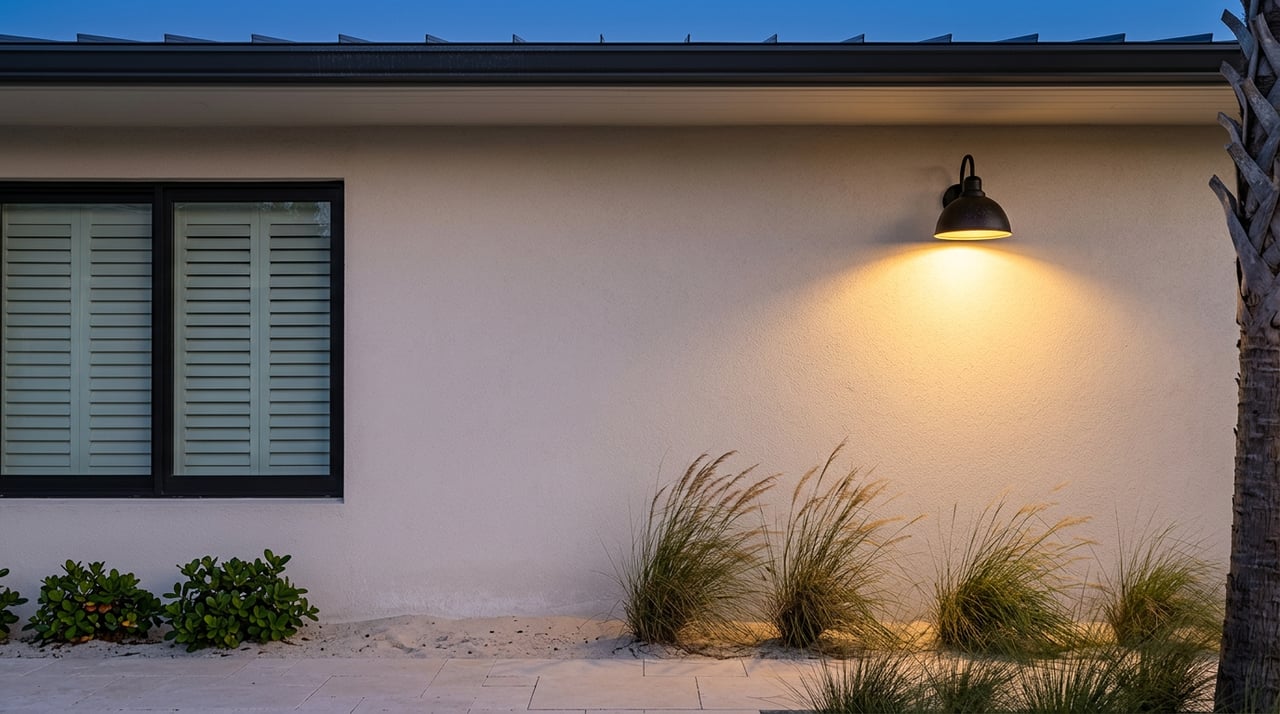
The porch lights along West Gulf Drive glow a little dimmer this month, and the reason is buried in the sand about ten feet from the wrack line. As of late July, biologists counted more loggerhead nests on Sanibel than in any season on record, and roughly 470 of those clutches were still incubating when the last public tally went out. Most of them will hatch between now and the end of September.
If you already live on the island, the story you probably heard was about numbers. The story worth telling is what happens next, and how much of it depends on the people who own homes along the beach.
A record built quietly over sixty years
The Sanibel-Captiva Conservation Foundation announced on July 29 that Sanibel had officially shattered its all-time single-season record for loggerhead sea turtle nests, with biologists recording 902 loggerhead nests on Sanibel alone as of July 28, surpassing the previous record high of 878 set in 2023. Add Sanibel's ten green sea turtle nests and Captiva's 240 nests, and the islands had 1,152 total nests for the season as of July 28, only 37 nests away from the combined loggerhead record of 1,177 set in 2023.
The baseline that makes those numbers land is older than most Sanibel homes. In 1971, 70 loggerhead nests were laid on a 12.5-mile stretch of beach comparable to Sanibel. Same beach, roughly the same length, thirteen times fewer nests. SCCF holds the first sea turtle monitoring permit ever issued in the state; Caretta Research and Charles LeBuff held it from 1959 to 1992, when the Florida Fish & Wildlife Conservation Commission transferred it to SCCF. The chart line between LeBuff's early counts and last week's total is not a straight one, but it is the reason the beach outside your lanai looks the way it does.
"Most loggerhead nesting is completed by the end of July, though a small amount of intermittent nests will continue to be laid in August and possibly September." — Jack Brzoza, SCCF sea turtle biologist, in comments reported by the Island Reporter
August is the month that decides what the record means
Nesting is the headline. Hatching is the outcome. SCCF's mid-season update noted that 16,606 hatchlings had already emerged this season, with about 470 nests still incubating on the islands and more expected to hatch throughout August. Each of those remaining nests holds roughly a hundred eggs. Do the arithmetic and the next six weeks will produce more hatchlings than the entire first half of the season.
Which means the record is not a June story or a July press release. It is a story about the light in your kitchen window at 10:47 p.m. on a Thursday.
Hatchlings orient by the brightest horizon they can see. On an undeveloped beach, that horizon is the reflection of moon and starlight on the Gulf. On a developed beach, it can be a coach light on a garage or a television flickering behind a slider. Nesting season spans mid-April through October, and nesting females face potentially lethal disturbances including boat strikes, entanglement in fishing line and debris, and disorientations from artificial lighting on the beach. Hatchlings that turn the wrong way rarely make it back.
The west end is carrying the record and the losses
Not every stretch of Sanibel is contributing equally. The island's west end played an exceptionally strong role in the surge, accounting for 698 loggerhead nests and breaking its own regional record of 631. That is the density behind the record. The same stretch is also where the season's darkest number lives.
Coyote depredation has climbed across both islands, and the west end has taken the brunt of it. As of July 28, Sanibel's depredation rate was 19.2%, with 175 nests lost to coyotes, nearly double the federal Loggerhead Recovery Plan's 10% management threshold. The losses remain heavily concentrated on Sanibel's west end, with the far west zone between Bowman's Beach and Blind Pass Beach seeing the heaviest losses by far, nearly four times the management threshold. SCCF field teams have been deploying heavy-gauge wire screens over freshly laid nests to slow the pattern, but the pattern is likely to continue as more nests near hatch dates.
If you live between Rabbit Road and Blind Pass, this is the block that matters most on the island right now.
What your porch light is actually doing
Sanibel's beachfront lighting ordinance is not a seasonal rule. Beachfront lighting ordinances are enforced year-round, and Gulf-front property owners are responsible for ensuring compliance with the city's marine turtle protection ordinances so that artificial lighting does not disorient nesting or hatching turtles. Most residents know that in the abstract. Fewer know what compliant actually looks like once the nests near their yard start pipping.
The short version of a long ordinance:
- Long-wavelength bulbs only. Amber or red LEDs under about 560 nanometers. White light, no matter how dim, disorients.
- Shielded fixtures. No direct line of sight from the bulb to the beach. If a hatchling can see the filament from the sand, the fixture is out of compliance.
- Interior light too. Sheer curtains do almost nothing. Blackout shades or interior shutters facing the Gulf are the standard.
- Level the sandcastles and fill the holes. Level all sandcastles and fill any holes when you leave for the day so that sea turtles and hatchlings do not become hindered or stuck. A ten-inch trench between a nest and the water can end a hatchling run.
- Flashlights stay in the bag. If you walk the beach after dark and need light, use a red-filtered headlamp and point it at your feet.
None of this is new. What is new is the volume. With 470 clutches still in the sand and the losses concentrated on the west end, one non-compliant fixture on a windy Tuesday can pull a whole nest off course.
If you find a nest, a track, or a hatchling
Save the number. The SCCF Sea Turtle Hotline is 978-728-3663, and it is the line to call to report any issues with nests, nesting turtles, or hatchlings. It runs 24 hours. Do not touch a hatchling. Do not carry one to the water. Do not shine a light to help it find its way. Call.
If a nest near your property is close to its expected emergence date, the SCCF stake will have a hatch window written on it. A "disoriented crawl" is a set of tracks that leaves the nest and turns toward the dunes or a house instead of the Gulf. That is the pattern the hotline exists for.
For residents who want the fuller picture, SCCF's coastal wildlife team has been briefing city council in public meetings. On July 21, SCCF presented a sea turtle and shorebird nesting season update to Sanibel City Council at MacKenzie Hall, 800 Dunlop Road, with a livestream available on the City's Facebook page. Similar updates typically follow through the fall. The SCCF blog at sccf.org posts the running counts, and the city's marine turtle guidance sits on mysanibel.com.
The number worth carrying into the fall
A thousand nests is a headline. A hundred thousand hatchlings would be a season. The gap between those two numbers is closed one porch light at a time by people who happen to own the beachfront property that a nesting turtle picked out four years ago on a night none of us remember. That is a strange kind of civic duty, and it belongs almost entirely to the people already reading this post.
The record year was made by turtles. What the record means will be made by residents.
If you are weighing how a Gulf-front or near-beach property fits into your long view on Sanibel, from lighting compliance to the way nesting patterns shape west-end shoreline planning, Mitchell Properties & Salty Hook Homes works alongside island homeowners on the details that outlast a single season. Schedule a consultation when you are ready to talk.