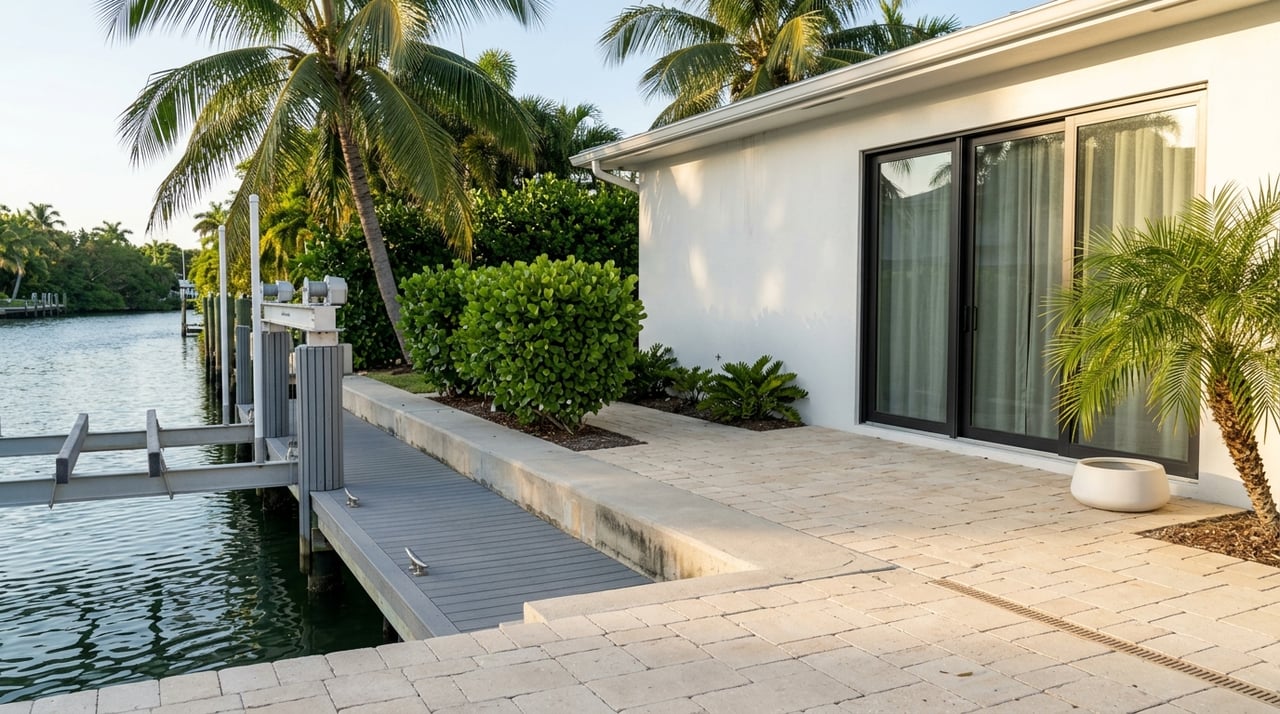
Dreaming about a Sanibel home where you can step onto your dock and head straight for open water? That vision is possible, but on Sanibel Island, Gulf access is about much more than water frontage alone. If you are shopping for a boating property in Sanibel Isles, you need to understand navigation, dock records, flood risk, and local permitting before you close. This guide walks you through the key checks so you can buy with more clarity and fewer surprises. Let’s dive in.
Why Gulf Access Needs Closer Review
On Sanibel, a waterfront address does not always mean simple boating access. The island’s flat topography and high groundwater table make stormwater and flood exposure a major part of waterfront ownership, and the city actively manages these conditions through its stormwater program.
For buyers, that means value is tied to function as much as scenery. You are not just asking whether the home touches water. You are asking whether your route from dock to open water is usable at normal tides and under current channel conditions.
Sanibel’s public boat ramp reaches the Gulf of Mexico, San Carlos Bay, Pine Island Sound, back bays, estuaries, and nearby open waters, which shows how connected the island’s waterways can be. At the same time, the city has also had to address navigation issues, including the Wulfert Channel dredging project, after storm sediment limited access to residential docks.
Check Waterway Usability First
Before you get attached to a dock or canal view, confirm the property works for your boat. Canal-front and bay-access homes can vary widely in actual usability based on depth, width, tides, and current channel conditions.
A dock may be present, but that alone does not tell you enough. You will want to know whether the canal has enough depth at low water, whether navigation is easy for your vessel, and whether shoaling or future dredging could affect how often you can get in and out.
This is especially important because Sanibel’s dock review standards look closely at site conditions. The city’s dock and boat lift contractor guide references mean high water, mean low water, canal width, and bathymetric depth as part of the documentation used for marine structures.
Review Dock and Lift Records
If the home has a dock or boat lift, ask for the full paper trail early. That should include the permit file, any prior approvals, and as-built surveys if available.
These records help verify what was approved and what exists today. On Sanibel, as-built surveys are used to confirm details such as dock square footage, setbacks, and waterward extension, according to the city’s marine structure guidance.
This step matters even if the structure looks well maintained. A dock that appears functional may still have permit history issues, nonconforming features, or limits on what can be repaired or replaced later.
Understand Repair and Permit Limits
Many buyers assume dock work is simple maintenance. On Sanibel, it is often a permitting issue.
The city notes in its boat dock, lift, and seawall checklist that repairs within the same footprint can still require a permit. It also states that if a dock is nonconforming, repairs are only permit-eligible when the repair cost is 50 percent or less of the dock’s market value.
Some projects may also need state or federal approvals. Lee County also treats dock and shoreline work as a separate permit category through its permit center, and projects within Sanibel may need to go through the local jurisdiction.
Know the Rules for Gulf-Front Lots
If you are considering a Gulf-front property rather than a canal or bay-access home, the due diligence changes. Sanibel uses the Coastal Construction Control Line to define its Gulf Beach Zone, and that creates specific limits on what can happen seaward of that line.
According to the city’s beach and dune protections, removing vegetation seaward of the line requires a permit. The only new structures allowed seaward of the CCCL are elevated dune walkways.
That is important if you are imagining major outdoor changes between the house and the beach. Gulf-front ownership on Sanibel comes with a stronger layer of coastal regulation, so it is smart to understand those limits before you plan upgrades.
Start Flood Research Early
Flood due diligence should begin as soon as you are under contract. Do not wait until the end of your inspection period.
The official source for flood hazard information is FEMA’s Flood Map Service Center. FEMA also notes that flood maps can change over time, and if the property is in a Special Flood Hazard Area, federally regulated lenders generally require flood insurance.
Florida also now requires a flood disclosure at or before contract execution for residential sales. As explained by the Florida Chief Financial Officer’s office in its property insurance changes overview, the seller must disclose whether flood insurance claims have been filed or federal flood assistance has been received on the property.
Ask for the Elevation Certificate
For waterfront buyers, the elevation certificate can be a very useful document. It is especially relevant for homes in higher-risk Zone A or Zone V areas.
FEMA explains that an elevation certificate can help property owners obtain flood insurance. You can also ask the local floodplain manager whether one is already on file for the property.
On Sanibel, local insight matters here. The city states through its stormwater information page that the building official can review floor elevations, offer retrofit guidance, and even make site visits to recommend flood protection measures.
Prepare for Insurance Inspections
Older coastal homes often need more than a standard home inspection. Insurance carriers may request additional reports before they issue or finalize coverage.
Florida’s homeowners insurance consumer guide says insurers may require a 4-point inspection for older homes, covering the roof, plumbing, electrical wiring, and HVAC. They may also request a roof-only inspection if the roof is 15 years old or older.
A wind mitigation inspection can also be helpful because it documents features like roof shape, roof-to-wall connections, shutters, roof deck attachment, and secondary water resistance. If you line these up early, you can avoid delays while comparing insurance options during your inspection window.
Follow a Smart Due-Diligence Timeline
A waterfront purchase on Sanibel usually goes more smoothly when you front-load the right requests. This is one of those markets where documentation can save you time, money, and frustration.
Here is a practical timeline to follow:
At Contract Signing
- Request the seller’s flood disclosure
- Ask for dock and lift permits
- Ask whether the seller has an as-built survey
- Request any elevation certificate on file
- Ask for prior inspection reports if available
Florida’s flood disclosure requirement is now a formal part of the sale process, and the city allows public-record requests for prior survey documentation.
During the Inspection Window
- Order the general home inspection
- Coordinate any 4-point, wind mitigation, or roof inspection needed for insurance
- Review flood maps and insurance quotes
- Verify canal depth, width, and navigation suitability for your boat
- Review dock, lift, and shoreline records carefully
This is the stage where many buyers realize a waterfront property needs more than a standard inspection. If boating access is part of your lifestyle goal, waterway verification deserves its own attention.
Before Planning Post-Closing Work
If you expect to renovate, rebuild, or modify exterior structural elements, learn the permit sequence before closing. Sanibel states in its permitting information that new construction and structural exterior modifications go to Planning first and then Building.
The city also says permit applications are usually reviewed in 7 to 10 business days, and up to 30 business days for complete submittals. Structural inspections are required within the first six months after permit issuance, so timing matters if you are buying with improvement plans in mind.
What Matters Most in Sanibel Isles
When you buy a Gulf-access home in Sanibel Isles, the biggest questions are practical. Can you navigate from your dock at normal tides? Is the dock properly documented? What does the flood profile look like? Will insurance be straightforward, or will it require more inspections and planning?
Those details may not be as exciting as sunset views, but they are what protect your budget and your boating lifestyle. On Sanibel, the strongest purchases happen when you treat waterfront value as a mix of access, documentation, elevation, and regulatory fit.
If you are comparing Sanibel with other Southwest Florida waterfront markets, this is one of the clearest distinctions. Sanibel often requires a deeper review of coastal rules, marine structure records, and flood-related documentation before you can fully judge a property’s fit.
Buying a Gulf-access home here can be incredibly rewarding when the details line up. If you want a detail-forward, concierge-style approach to evaluating waterfront homes in Southwest Florida, Daniela Mitchell can help you navigate the search, inspections, and documentation with confidence.
FAQs
What does Gulf access mean for a Sanibel Island home?
- On Sanibel Island, Gulf access generally means your property has a navigable route from its dock or nearby water access point to open water, but you should verify actual canal depth, width, tides, and channel conditions before closing.
What documents should you request when buying a Sanibel dock home?
- You should ask for dock and lift permits, prior approvals, as-built surveys, the seller’s flood disclosure, any elevation certificate, and prior inspection reports if they are available.
Why is flood research important for Sanibel waterfront buyers?
- Flood research is important because FEMA flood zones can affect insurance requirements, lender requirements, and future ownership costs, and Florida requires sellers to disclose certain flood history information during residential sales.
Do Sanibel dock repairs require permits?
- Yes, Sanibel notes that even repairs within the same dock footprint can require permits, and nonconforming docks may face added limits on what repairs are allowed.
Are Gulf-front Sanibel properties regulated differently than canal-front homes?
- Yes, Gulf-front properties are affected by Sanibel’s Coastal Construction Control Line rules, which limit vegetation removal and restrict what new structures can be built seaward of the line.
What inspections may be needed for an older Sanibel waterfront home?
- In addition to a general home inspection, you may need a 4-point inspection, a roof inspection, and a wind mitigation inspection, depending on the home’s age and the insurance carrier’s requirements.